
Duct insulation guide
How to Attach Duct Wrap Insulation to a Duct
Short answer: tape seals duct wrap, fasteners hold it on. Wrap the duct with the facing out and a 2 inch overlap, fasten the overlap to the duct with mechanical fasteners, then seal the seam with foil tape. The insulation makers call for the fasteners. Here is the whole job, from sealing the duct to the last piece of tape.
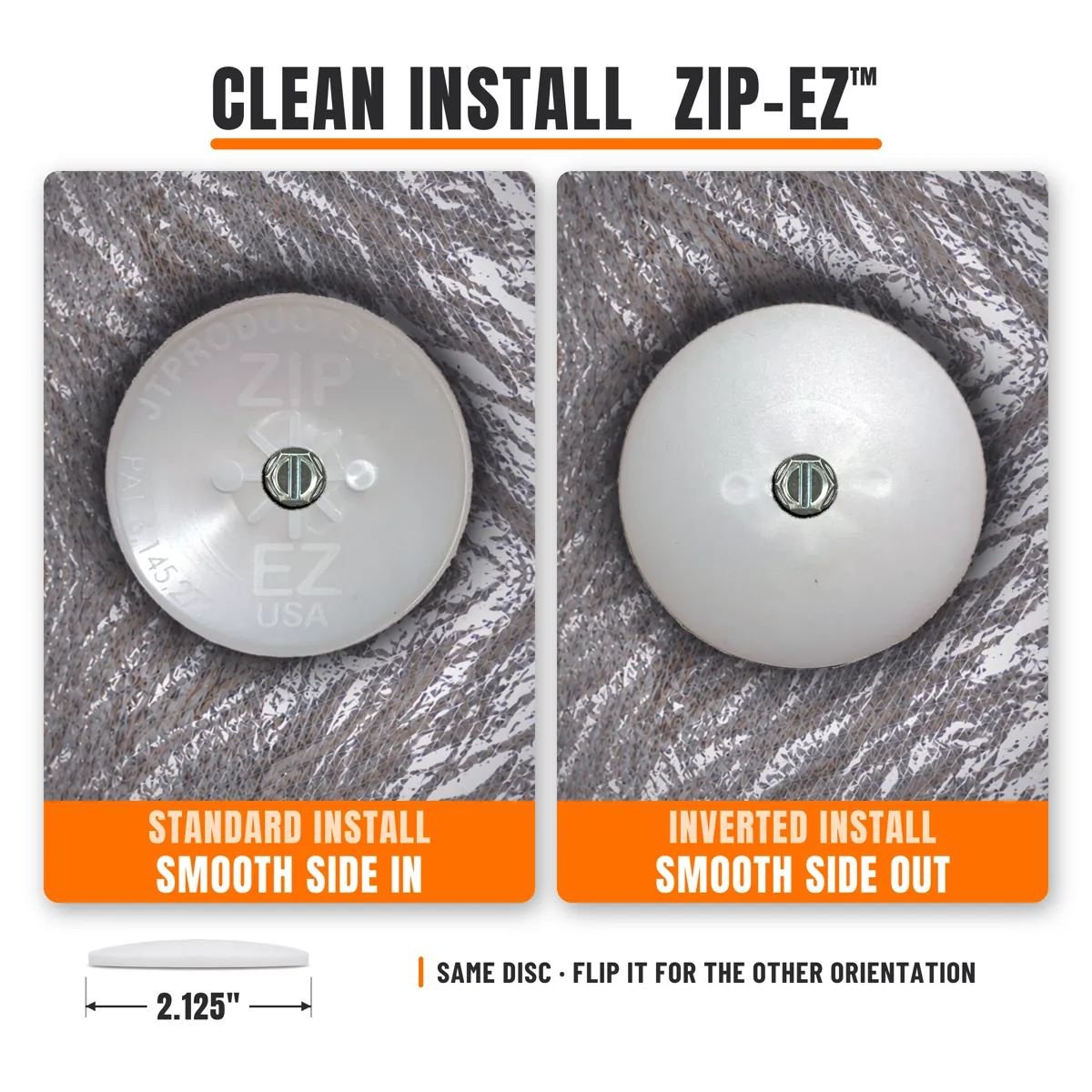
Why it matters
Duct wrap does two jobs. On cold supply runs it keeps the metal from sweating, and that water ends up on ceilings and in framing. On every run it keeps heat where the system sent it. A wrap that sags or opens at the seams stops doing both, and it usually shows up as a callback.
What you need
- Duct wrap in the R-value your energy code calls for in unconditioned space. Buy a little extra for overlaps and fittings.
- Fasteners. Tie wire, pins or a mechanical fastener such as Zip-Ez™. More on the choices below.
- Foil tape rated for the facing you are using, to seal seams and joints.
- Mastic for the duct joints, before anything gets wrapped.
- Tools: drill/driver, insulation knife with fresh blades, tape measure, straightedge, gloves, safety glasses and a dust mask. Long sleeves. You know why.
Before you unroll anything
- Seal the duct. Mastic the joints, seams and takeoffs. Insulation does not stop air leaks. Wrap over a leaky joint and you have only hidden it.
- Fix the metal. Dents, holes and loose sections are easy to fix now and a pain once the duct is wrapped.
- Clear a path. You need to get all the way around every run. In a tight attic or crawlspace, plan how you will reach the far side.
- Measure and cut on a flat surface. Add about 2 inches for the overlap. If there are several duct sizes, mark the pieces.
Wrapping the duct
- Facing out. Fiberglass against the duct, foil or FSK facing to the outside.
- Wrap and overlap. Take the wrap around the duct and lap the trailing edge over the leading edge by about 2 inches. Do not pull it so tight that it crushes the fiberglass. Crushed insulation loses R-value.
- Fasten the overlap. With Zip-Ez™, one fastener per foot along the overlap. On rectangular duct 24 inches or wider, the insulation makers call for mechanical fasteners on the underside too, no more than 18 inches on center.
- Tape the seam. Run foil tape the full length of the overlap and press it down hard.
- Butt the next piece. Push the ends tight together with no gap and tape the joint.
- Do the fittings. Elbows, tees and transitions get their own cut pieces, fastened and taped. A bare fitting is where the sweating starts.
- Walk it. Look for gaps, loose edges, untaped seams and crushed spots before the ceiling closes up.
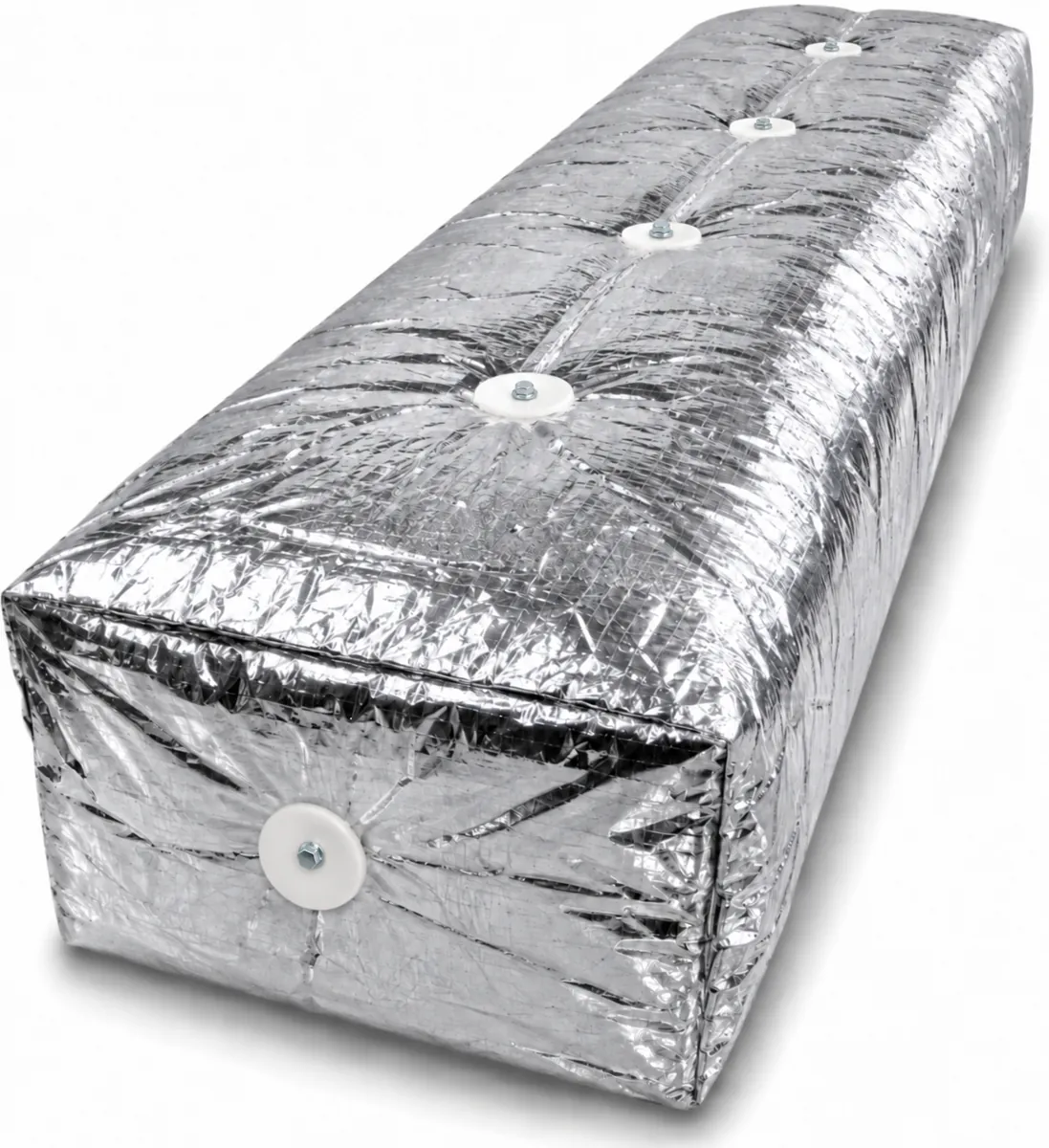
Picking a fastener
Tape seals but should not be what holds the wrap on. Tie wire holds but is slow and hard on hands. Adhesive pins depend on a bond that heat can soften. A disc driven on a screw holds mechanically with the drill you already have. We compare all four, side by side, in duct insulation fasteners vs pins vs tie wire vs tape.
Fastening with Zip-Ez™
- Slip a Zip-Ez™ disc over a #8 x 1 in hex washer-head self-drilling screw.
- Set it on the overlap of the duct wrap or foam board.
- Drive it into the duct with your drill. One per foot.

It goes at least twice as fast as tie wire. Each bag holds approximately 250 discs (sold by weight). Screws are not included.
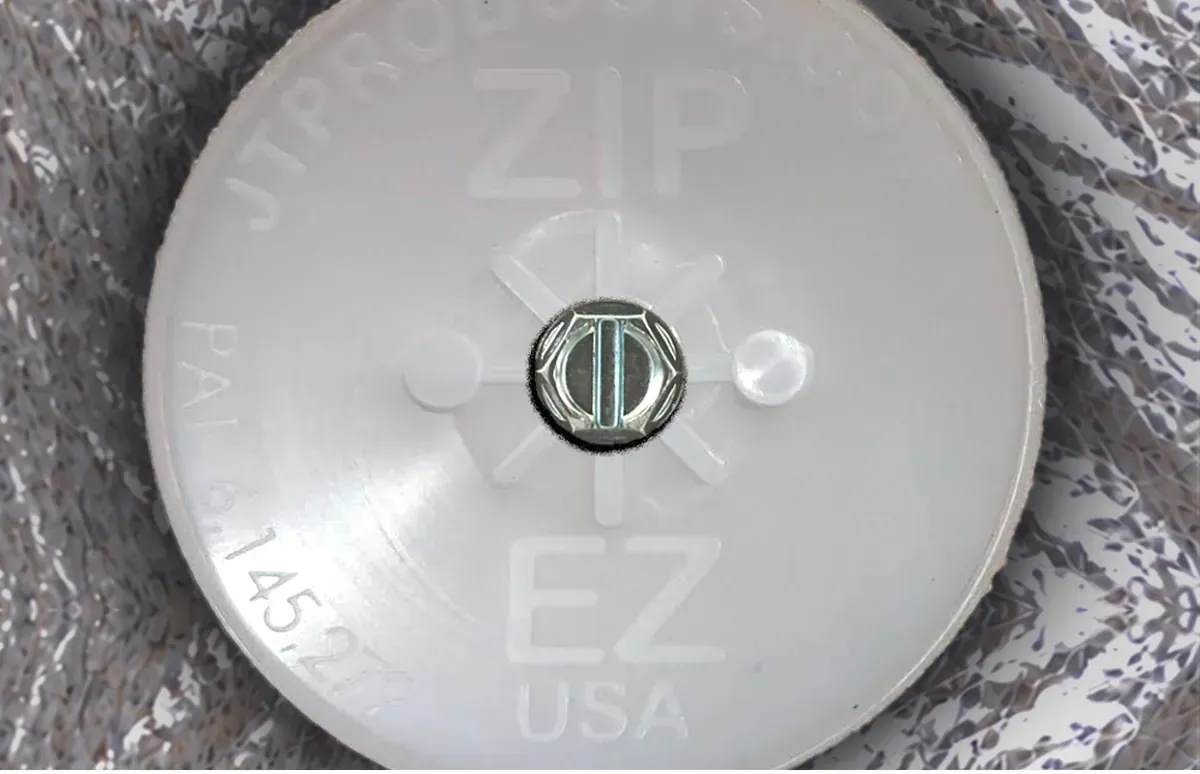
Does a screw through the duct leak?
It is a fair question. In April 2010 an independent BPI-certified HERS rater tested Zip-Ez™ with a Minneapolis Duct Blaster at 25, 50 and 100 Pa, before and after the fasteners went in. Zero air leakage was measured at the fastener penetrations, and fog and a smoke pencil showed none either. Read the test report.
Mistakes we see
- Wrapping before sealing. Mastic first, every time.
- Crushing the wrap. Pulled too tight or fastened too hard, the fiberglass loses thickness and R-value.
- Fastened but not taped. Moisture gets into an untaped seam and wets the fiberglass.
- Skipping fittings. The odd shapes take longer. They are also where condensation shows up first.
- Guessing the R-value. Check the code for your climate zone before you buy the wrap.
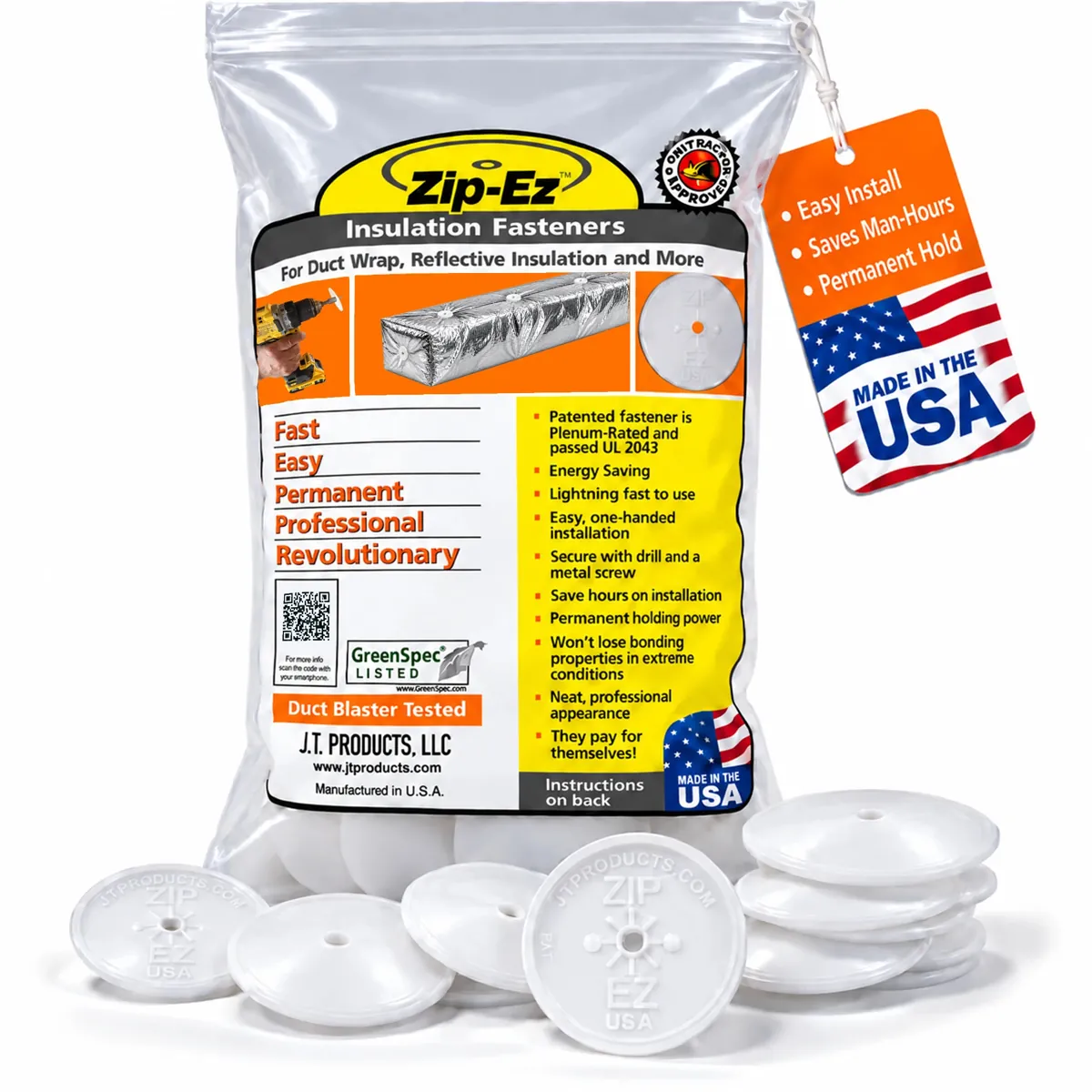
Approximately 250 per bag. Works on duct wrap, fiberglass duct insulation, bubble reflective insulation and rigid foam board. Patented design, made in the USA.
Questions
How do you attach duct wrap to a duct?
Wrap it with the facing out and a 2 inch overlap, hold it on with mechanical fasteners along the overlap, then seal the seam with foil tape. With Zip-Ez, that is one fastener per foot, driven with a drill.
Can I just use foil tape to hold duct wrap on?
Tape seals the seams and the vapor retarder. Owens Corning, Johns Manville and Knauf call for mechanical fasteners to hold the insulation on the duct, including on the underside of wider rectangular duct. Tape alone can let go as temperatures swing, and the wrap sags.
What holds duct wrap insulation in place?
Mechanical fasteners: tie wire, weld pins, or a disc driven on a screw such as Zip-Ez. Adhesive stick pins also work but depend on an adhesive bond that heat can soften.
Which way does the foil facing go?
Out. The fiberglass goes against the duct and the foil or FSK facing faces the room, so the vapor retarder is on the outside of the wrap.
How much overlap do I need?
Leave about 2 inches where the wrap laps over itself, and check the insulation maker's instructions for the job. The overlap is where you fasten and tape.
Do I still need tape if I use fasteners?
Yes. Fasteners hold the wrap on the duct. Tape seals the seams and the vapor retarder. Each does a different job.
What screw goes with Zip-Ez?
We use a #8 x 1 in hex washer-head self-drilling sheet metal screw. Screws are not included in the bag.